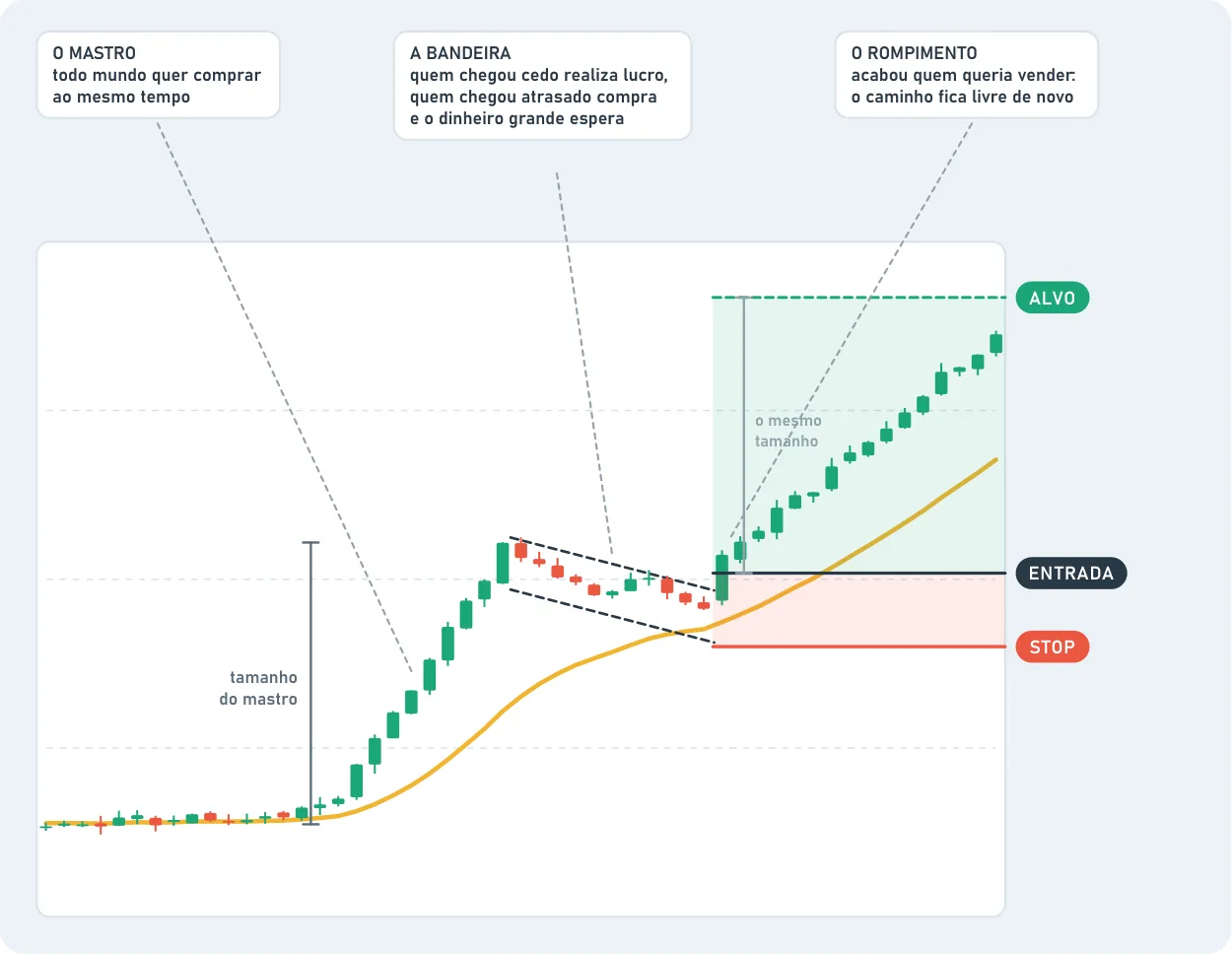
What it is. A flag is a short pause in the middle of a strong move. It has two parts. The flagpole: the price moves a lot, fast, in one direction. The flag: a short breather, sideways or slightly against the flagpole, between two almost parallel lines. When the breather ends, the price can start moving in the direction of the flagpole again.
What it means. On the flagpole, everyone wants to buy at the same time. On the flag, the early buyers take profit, the late ones buy, and the big money waits. Nobody is in a hurry to get out of their position. Once the people who wanted to sell are done, the road is clear again, and the price can out in the direction of the flagpole.
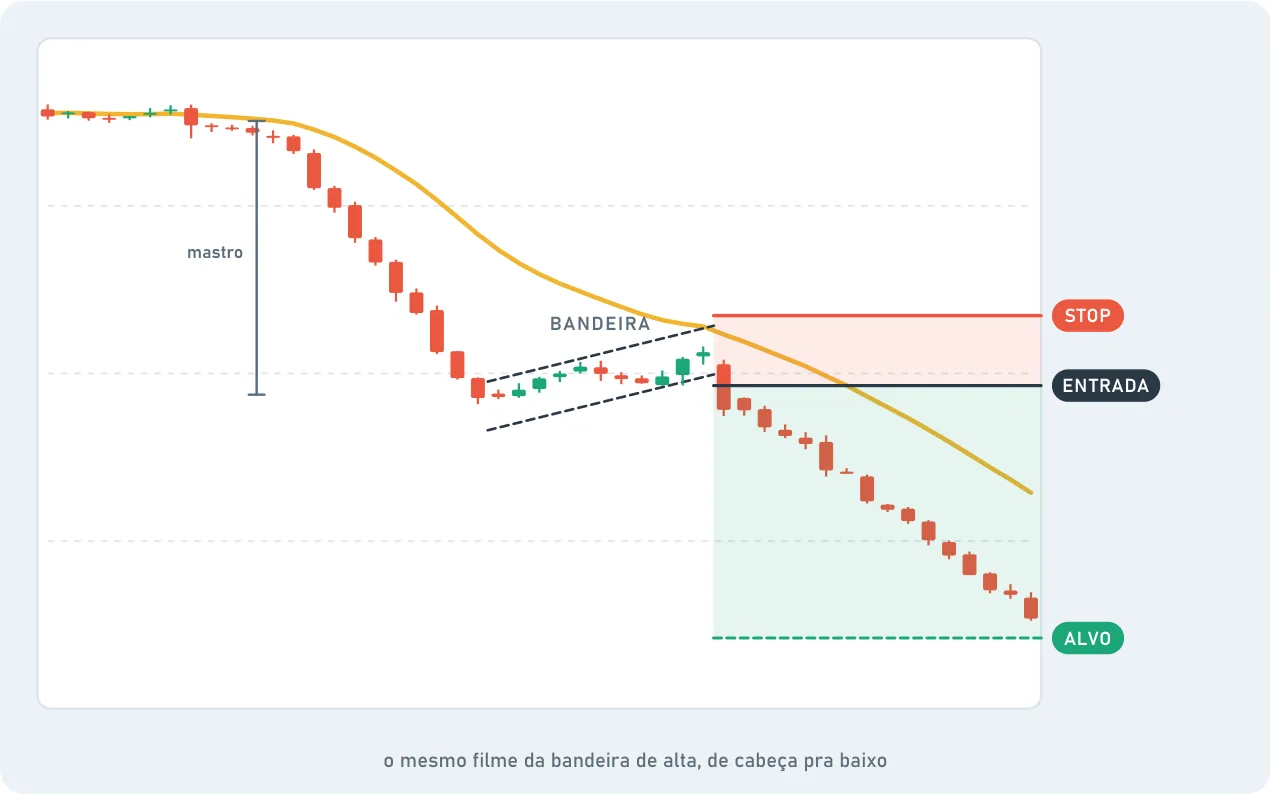
The bear flag. It's the same movie upside down. The flagpole is a strong drop. The flag is a short breather, up or sideways. The breakout is down.
How to draw it. Connect the tops and the bottoms of the breather with two lines, touching the candle bodies. The lines end up almost parallel and slightly tilted against the flagpole.
The size of the breather. In a strong flag, the breather gives back only a little of the flagpole. Chapter 11 (Fibonacci) shows how to measure it: the shallower it is, the more strength.
The confirmation. The price closes outside the flag, in the direction of the flagpole. Before that, it's just a breather.
One way to set it up (an example, not a rule).
Entry: on the breakout of the flag, in the direction of the flagpole.
: on the other side of the flag. If the price comes back and crosses the whole breather, the flag is dead.
Exit: in three parts, like in chapter 16. Many people use the size of the flagpole as a reference for how far the move can go.
When it dies. The breather gets too deep or too long, or the price breaks out the opposite way from the flagpole. Then it's not a flag anymore.