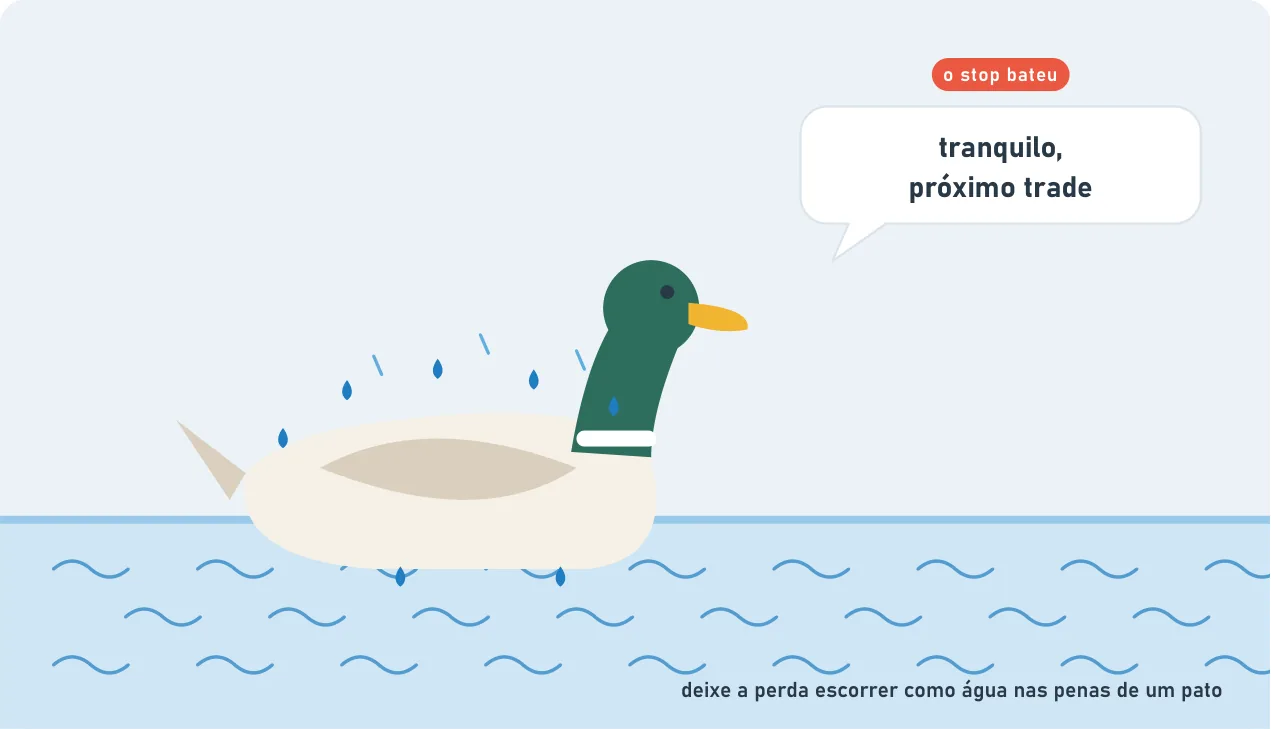
Losing shouldn't hurt. It sounds strange, but it's the base of everything. If the risk was decided beforehand and the was in place, the loss was already part of the plan. A comparison: think of a shop owner. Every month they pay the rent, whether they sell a lot or a little. The rent isn't a loss, it's the cost of keeping the shop open. A loss that was in the plan is similar: it's the cost of being in the game.
Play on. When the stop gets hit, the right reaction is: "fine, next trade". No anger, no revenge, no trying to make it back on the next one.
Clean slate. An image helps: let the loss roll off you like water off a duck's back. The last trade can't carry any weight in your next decision. Every trade is a new trade.
If you lose your balance, get up and walk away. Sometimes a loss really gets to you, and you feel like you're losing control. That has a name: going on tilt. Many traders have a deal with themselves: if they stop thinking straight, they stop trading. Get up, step away from the screen, clear your head. The market will be there tomorrow. Your money, if you stay on tilt, might not.
The mistakes your head makes.
| What happens | How it shows up | The antidote |
|---|---|---|
| Fear of missing out | Buying something that already went up a lot because everyone is making money | Wait for the . If there's no setup, there's no trade |
| Revenge | Going in bigger right after a loss to "make it back" | Size decided before the trade (chapter 17) |
| Marrying the position | Removing the stop because "it'll come back" | The stop doesn't move against you. Ever |
| Overtrading | Trading out of boredom, with no setup | A limit on trades per day, decided beforehand |
| Ego | Needing to be right | The goal is to make money, not to be right |
Crawl, walk, run. Nobody becomes a trader in six months. The first years are for crawling: few tools, small positions, a lot of study and a journal of every trade. Then comes walking: you already know your setups and you increase your size little by little, as consistency shows up. Running comes much later. Skipping steps is the fastest way back to the start.
Small goals. Wanting to double your account in the first year is the goal that breaks the most people. Small goals you actually meet build the confidence that big goals destroy.
Patience is the tool. Most of the work is waiting. Waiting for the setup, waiting for confirmation, waiting for the . If you can't stand waiting, you end up paying the market for excitement.
When life changes. Moving house, a child, a new job, grief. When life gets tight, a lot of people trade less and smaller. Protecting your head comes before protecting the trade.